
Why “viruses don’t exist” is so difficult to accept
Inertia, inadequate education about science, confusion regarding "germs" and viruses

When I started this Substack almost two years ago, I had been learning about the fraudulence of virology and the germ theory for nearly four years—since the beginning of the COVID-19 plandemic in 2020. I had reached the point where the absence of scientific evidence for the existence of viruses seemed obvious to me. The logical fallacies in the experiments conducted in virology labs by which virologists claimed to have found SARS-CoV-2 or any other virus seemed so clear that they should be impossible for a thinking person to miss.
Yet, what I have found as I have attempted to explain these things to friends and family is that many thinking people do not find this information as clear as I do. There seem to be at least three reasons for this. Understanding what these reasons are seems important if we want the truth about disease to become widespread. How to overcome them is, of course, another conversation. But we need to start with knowing why intelligent, thoughtful people are so resistant to this information.

Three Reasons
In summary, the reasons I see for people resisting the clear evidence of virus nonexistence are these:
The inertia created by a narrative that has been mostly unquestioned for almost a century and a half. The very familiarity of this narrative means that it is entangled with many other beliefs about how the world works, and all are linked directly to our training to trust what experts tell us. Letting go of these ideas can be destabilizing even to the level of personal identity. The continual, 360-degree reinforcement of this narrative by entertainment, advertising, and media messages is also a factor.
The woefully inadequate teaching we receive about what science is and how it is done, especially in the era of computer modeling and the shift to inference and speculation in scientific research. I include in this our inadequate education in logic and discerning logical fallacies, since science tends to be rife with these fallacies. The completely wrong information we are taught about biology and how our bodies work relates to this, but is a separate issue in itself, in my opinion.
Confusion about what “germs” are as well as what “viruses” are claimed to be. This relates to a lack of historical information about how the germ theory began and became the dominant explanation for illness—and, indeed, what the germ theory actually is and what it says about illness causation. It also relates to both trusting experts to be infallible in their knowledge of the truth, and believing that one needs a degree in microbiology or medicine to understand the basic methodology used in virology labs to “find” viruses.
Being someone who likes to explore ideas by breaking them down, I will write in some depth about each of these in this and the next two articles in This Changes Everything.
The Inertia of a Deeply Ingrained Narrative
The fact that this narrative has been in place for so long and is so deeply familiar makes it more difficult to overcome than I thought it would be two years ago. We are working against a tremendous amount of inertia that is continually reinforced every single day.
The narrative of “germ theory,” which includes viruses in the category of “germs,” has been the dominant explanation for what causes illness since the 1880s or so, and the only paradigm taught in medical schools since at least the 1920s. That means that five or six generations of people, in the western world at least, have heard nothing except this to explain why they get sick.
We hear it every time we go to the doctor’s office. We hear it in the news many times per week if not daily. This is true especially in these times, when a viral pandemic has been very recently used to impose heavy protocols and tighten social control, and more pandemics are said to be right around the corner.

We hear it two out of every three times an advertisement comes on the television, probably three or four times every hour. Even if we are not at home, but are at the gym, at the airport, or at the gas pump, we see this message on ever-present screens. It is also displayed on the sides of buses, on billboards, and nearly everywhere we look in the public square.
The assumption that diseases are viral in nature is woven throughout entertainment. It is the subject of movie scripts, TV dramas, sitcom plots, and even classic literature. In Little Women, Beth becomes ill with what is called Scarlet Fever in the 1860s which she contracted after babysitting a sick child. This is just one example of many.
Even everyday conversation at work and at home is peppered with references to people catching colds from coworkers, the kids bringing home a bug from school, or the need to boost one’s immune system to protect against the flu that is going around.
We have had no reason to question the truth of this paradigm. Our personal experience throughout life seems to validate that microbes passed between people are the cause of colds, flu, pneumonia, strep throat, and almost every other common illness that we have had. We all have memories of becoming sick when we were with someone who was sick, or having “infections” clear up when we took antibiotics. Germs cause disease. It’s obvious!
So when someone starts telling us that germs don’t cause disease and viruses don’t exist, many people’s first thought is, “This person must be nuts. Conspiracy theorist. Got this crazy notion from somewhere.”
What they’re really saying is, “This information makes me uncomfortable. It’s impossible that I what have believed and what makes sense to me could be completely untrue. I don’t see how that could possibly happen. So I’m going to reject the whole idea and react against the person telling me this as if she is crazy, even though I know her and I know that she isn’t crazy.” (Not, of course, recognizing this as the logical fallacy of ad hominem, criticizing the messenger rather than the message.)
The Challenge Is Existential
Matters of health are life-and-death matters, and this means there is fear of death. This is why threats of deadly pathogenic particles are such an effective way to control entire populations. We saw this in the COVID- 19 plandemic, when major swaths of the world population took an experimental injection they believed would protect them from the deadly virus that they believed was on the loose. They had been programmed for generations to entrust their health to medical systems and experts who, they believed, knew more about their bodies than they did.
And, in spite of the ever-accumulating evidence that those injections are responsible for massive, tragic amounts of injury and death, for many there is an abiding faith in the effectiveness of vaccines and a refusal to acknowledge any other information.
This refusal to let go of the familiar narrative around illness happens because of the belief that the medical system is there to protect us from every deadly virus, and maybe even from death itself. To acknowledge that this core belief is untrue challenges not just a set of ideas in a person’s mind, but their deeper sense of safety in the world.
It can even shake a person’s sense of identity. “I had all these experiences of illness that fit perfectly into the germ theory and virus narrative. There is a whole story around each of those experiences that was part of my life, and those memories are part of who I am. If the germ theory narrative isn’t true, what did I experience? Was I not really sick? Are my memories false? Am I still that person who had those experiences, if those memories were not true? No, that is impossible.”
Although this thought process would not take place consciously in the split second when a person is told that viruses have never been proven to exist, challenging long-held ideas on a topic so visceral can create existential discomfort. Even if it’s on an unarticulated level, this can be enough to cause a person to refuse the information.
A Challenge to What Is Real
If the thinking person can get past this visceral shut-down, they may encounter another blockage to the message about viruses. Entertaining the notion that viruses and bacteria do not cause disease and that illness is not contagious can be personally destabilizing on a cognitive level.
To question their fundamental understanding of how the world works can cause a person to feel as if the ground is opening up. It seems impossible that a false narrative can have been a defining feature of our understanding of health and our bodies for generations. This destabilizes our sense of reality.
How could we not know? How could our doctors not know? How could we not have heard a single whisper of any other explanation for illness? And, if this information that we thought was true is actually not, what else that we think is true is actually not?
This is where a person might turn to the idea of “conspiracy theory.” They might think that what you’re saying about virology and germ theory being fraudulent is a crazy idea whose purpose is only to confuse and mislead people.

This handy phrase, which was popularized by the CIA in the 1960s when significant numbers of American adults were not buying the official explanation of the JFK assassination, has continued to be very useful to ensure that dominant narratives stay dominant. Any idea suggesting that there has been a deliberate effort to teach false beliefs on a mass scale, and to lie to keep them in place for profit and power, is easier to dismiss if it is given this label.
The “conspiracy theory” label handily dispenses with the need to examine the information to see if it is true or false. It contributes to the inertia that prevents people from asking questions about comfortable narratives or even wondering about them. It also enables dismissal of the person saying these things, even if she is someone known and hitherto trusted. Well, she has had some crazy ideas in the past, so she must have picked up these ideas from some sketchy internet site.
But What About Those of Us Who Did Question?
This is the abiding question of the past six years. Why did some of us find it possible to see through the lies when so many were taken in? What is different about us? Finding some answers to this might help us in our quest to get through to those who do not want to know. The fact that I was able to overcome the inertia of this narrative, along with many, many others, is still a puzzle to me.
I heard a doctor say, in March 2020, that germs don’t cause disease. It shook me, I won’t lie. But it didn’t destabilize me. I didn’t think “conspiracy theory.”
I did for a moment think “this idea is crazy,” but I didn’t think the doctor who said it, Dr. Kelly Brogan, was crazy. I became curious and started looking for more information. I very quickly abandoned the idea that what Dr. Brogan said was crazy, and made an effort to understand the new information.
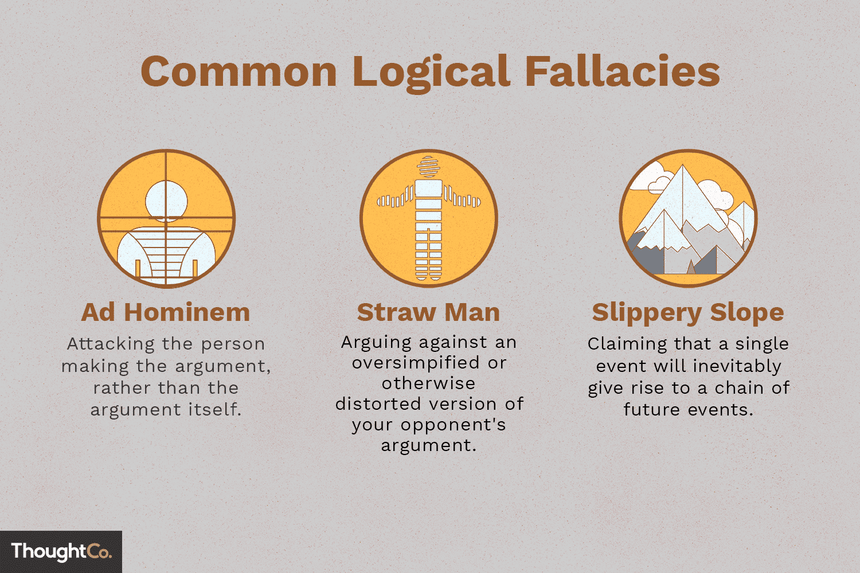
That’s how it started for me. After that, learning about logical fallacies was a very important part of my education. That is the piece that makes it easily possible for people with no science background, never mind degrees in medicine or microbiology, to see the flaws in both germ theory and virology.
And I wonder if this might be one of the factors that causes discomfort for people hearing that germs don’t cause disease. Somewhere they know that their lifelong understanding about bacteria and viruses doesn’t quite makes sense, even though they have had experiences that seem to validate it. If this insight is correct, it might argue for logic, not just new information, as a gateway to overcoming the inertia of ingrained beliefs.
Armchair Psychology and Propaganda
You can see that I have attempted some armchair psychology in an effort to understand why there is such resistance to learning a new way of understanding health and disease. The next two articles in this series will deal with more concrete and less amorphous arguments about why “viruses don’t exist” is such a challenge for so many thinking people.
I will just add that I do not believe people are stupid, asleep, willfully ignorant, or even entirely responsible for the positions they take or the feelings they have when confronted with information that challenges their beliefs. We have been subjected to massive amounts of propaganda on this issue for more than a century. Since our great grandparents’ day! And it has become even more intense in the past six years as viral pandemics have become a way to increase social controls and bring in technocracy.
The wielding of existential fear as a weapon against logical thought and human freedom is becoming extreme, and is highly reprehensible. So, while people are ultimately responsible for their thoughts and their decisions, I believe there is no percentage in blaming people for the views they have. It’s our job to find ways to counteract the effects of the propaganda, brainwashing, and manipulation through fear.
Thank you for reading! Please consider subscribing. And comment with your thoughts on why it can be so hard for people to entertain this information.
Read more
Mike Stone
Read more about the fraudulence of virology with Mike’s deep dive into John Franklin Enders, who invented the cell culture experiment in 1954.

Dawn Lester
When you start questioning received knowledge about illness, soon you are asking about mental as well as physical illness.

I cannot buy into the virus nonsense because no one can explain where they come from, how they move around, where they go during the warmer months, how something supposedly dead can come back to life, how there can be hundreds or thousands, how not having any vaccines I don't get the flu, how they stay in the body IF we have an immune system, how transmission works, how there are no studies showing efficacy, how viruses cause death, why there is no method of detection that is worth a hill of beans, etc.
There is just nothing to hang my hat on. Nothing to be concerned with and nothing to worry about. And no doctor that can explain anything about viruses. CASED CLOSED.
Nicely thought through and well written, thank you.
"I will just add that I do not believe people are stupid, asleep, willfully ignorant, or even entirely responsible for the positions they take or the feelings they have when confronted with information that challenges their beliefs..."
I do so believe. But why?
Because some people do manage to think, question, challenge on lack of evidence, and identify stupid logical fallacies. Anyone who cannot spot a logical fallacy is, indeed, stupid. If 'smart' cannot identify logical fallacies, what good is it? What would be the difference between smart and stupid?
But why are so many stupid? Because they've been trained from childhood to obey, to worship (what amounts to 'political') authorities as "The Deciders who Know". To varying degrees, most people live that way. Habitual deference to 'Authority" over a life time makes people literally stupid and dishonest. They can't even figure out what is right or wrong, not when Authority comes calling. 'Deference and Obedience...that's right. Thinking and questioning...that's wrong'.
They never learn to practice and trust their own reasoned judgements about anything controversial.
But how could I possibly know all that to be true? I am only one man. I know it BECAUSE I can think and have noticed throughout life that others do not; and because occasionally I do encounter some individual in person who exhibits willingness and ability to think.
I also know it because I understand that we live in the age of the PostModern. Modernity, the age of the rise of reason, is largely past now. To borrow phrasing from Ayn Rand, reason is today an outcast, and nearly an outlaw.
Naturally, in this age of Postmodernity, reason is mistrusted and maligned and devotion to Authority is ascending. This causes tyranny, because individual freedom requires individual thinking among people with lives of their own. People today mostly want to be led and fed. They feel that policy of life is 'practical'.
When people long for a collective mind to (somehow) supplant their own individual responsibility to question and think, they will support tyranny. They will gravitate toward the "civic virtue" of "public health" and the myth of viruses. It feels right to them.
Sorry about excessive length of my comment.