
How Inference Took Over Science
Why "viruses don't exist" is so hard to accept, Part 3

Back in the 17th century, a shift occurred in the west regarding the source of knowledge about the world. Prior to that, it had been mainly religion that informed people of what was real and true and why things happened. The gods, or later God, were responsible for natural phenomena such as weather and the cycles of nature. Human experiences such as being sick were also said to be caused by deities, mostly to punish people for misbehavior.
However, in the 1600s, science began to replace religion as the source of knowledge. People started to be interested in looking at the natural world themselves and learning what made it go. Telescopes and microscopes were making it possible to observe aspects of the world that had been either too far away or too tiny to see.
In stepping away from supernatural causes for natural events, science embraced a materialistic view of the world. Only what was apparent to the human senses, mainly vision enhanced by lenses, was subject to scientific exploration. This led many to believe that the “real” consisted only of what could be observed, measured, and quantified. In terms of biology and the human body, this meant that what could be known about how biology worked, including sickness and health, had to come through what we could see, hear, or touch.
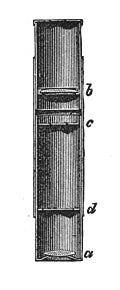
The first microscope, probably made by Zecharias Janssen in the early 17th century. Image under Creative Commons license, via Wikimedia
For the most part, biology ignores nonmaterial aspects of reality like energy and electricity in the human body, emotions and thoughts as powerful creators of reality, and confidence and social connection as having significant impacts on health. The placebo and nocebo effects—people getting well or getting sick based only on belief in having experienced something curative (placebo) or disease-inducing (nocebo) are acknowledged. But those effects are considered entirely individual and idiopathic.
The material is science’s territory, and biology-related sciences still follow a materialistic view in refusing to acknowledge non-material causes of conditions in the body. In spite of this material focus, however, these sciences have taken a turn over the past century and a half away from an empirical or observational basis for scientific investigation. Instead, methodology has relied more and more on inference, speculation, guesswork, and imagination.
This is a turn toward the non-material but not in a way that acknowledges we live in a realm of which materiality is only one aspect. Rather, a focus on physical happenings in the body when someone is sick is being replaced by a focus on what happens in the mind of the scientist who is investigating.
Imagination is of vital importance
I want to pause here for a moment and make it clear that materialism offers a very limited understanding of the world. There is much more to our realm than what can be understood through strictly material means.
Besides this, the exercise of non-material capacities such as imagination, inference, and guesswork is part of scientific investigation. These capacities are a significant aspect of creativity, which is one of our quintessential superpowers as human beings. Inference and speculation have an important place in any creative process, including scientific research.
But there is a big “however” here, and it has to do with the scientific method. This method, like science itself, is essentially material.
In school, we learn that the scientific method is the standard way that explorations of how nature works are initiated and conducted. This includes observation of a phenomenon that raises a question in the scientist’s mind. The ways that hypotheses are developed and tested through experiments are also directed by the materialistic basis of the scientific method. We are taught that in biology and many other sciences, scientists observe something happening in nature, develop a hypothesis for why that thing happens, and create experiments to test the hypothesis.
The results of these experiments tell the researcher whether the hypothesis was correct or not correct. These results show clearly what the scientist has learned about the cause of the phenomenon that was observed.
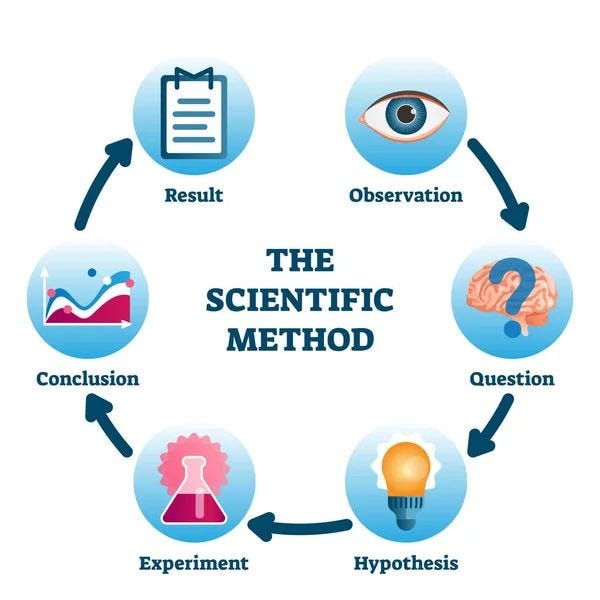
Inference and guesswork can suggest to a scientist what might be happening in the what the scientist is observing. Speculation and imagination can help formulate the hypothesis. This is their appropriate role in scientific research.
In the age of finer and finer magnification power in microscopes and the increased use of mathematical and computer modeling, however, science has moved further and further from a process founded on empirical and observed natural phenomena and life-based experimental results as evidence. It has moved from using speculation as a spur to develop a hypothesis into basing its entire investigative process on the speculative and imaginary, framed in a way that only looks like science.
We will see shortly how virology began to change the way guesswork was used in science. This change distorted the scientific method itself, a distortion that has continued and indeed worsened ever since.
Falsifiability
A scientific hypothesis must be falsifiable, as Karl Popper, a philosopher of science, argued in 1959. This idea is generally accepted as an essential part of how science is done.
This means the hypothesis is subject to being proven false. Opinions or ideas plucked out of the air are not falsifiable. Neither are articles of belief. Ideas of these types are unable to be proven or disproven. They can’t be tested; therefore they can’t be scientific hypotheses. The imaginary, the speculative, the inferred are also of this nature. They can help a scientist come up with hypotheses, but they can’t on their own be hypotheses.
Having observed a natural phenomenon and developed a hypothesis as to what causes it, the scientist sets out to test whether that hypothesis is correct or not. The researcher designs experiments that are reproducible by other experimenters using the same conditions and setups. The harder scientists work to falsify their hypotheses, the stronger the hypotheses become when experiments continue to yield the same results. At some point, such a hypothesis is elevated to the status of theory. It has so far been proven true despite efforts to falsify it.
In a nutshell, the scientific method is, according to the Encyclopaedia Britannica, “the process of observing, asking questions, and seeking answers through tests and experiments.” As Wikipedia puts it, “Scientific research involves using the scientific method, which seeks to objectively explain the events of nature in a reproducible way.”
Is this what happens in virology labs? It is not.
The “search” for viruses started with an observation, people or plants getting sick. So far so good. But it quickly went astray. The notion that viruses exist and cause disease may be the first time in modern science that a speculation did more than inspire a testable hypothesis—it became a hypothesis, then a theory, and grew into an entire field of science without ever being proved or even tested.
How did this happen?
In the second-half of the 19th century, scientists such as Louis Pasteur and Robert Koch developed the germ theory of disease [see my previous article, Confusion about Bacteria, ‘Germs,’ and Viruses and What They Do]. This theory is also based on supposition, not evidence. Its supposition has never been proved, but the hypothesis of pathogenic bacteria as a primary cause of disease was elevated to the status of a theory almost immediately and is still viewed that way today.
Right away, researchers began to observe illnesses which they could not attribute to bacteria. They inferred that diseases such as rabies and tobacco mosaic disease (observed in tobacco plants) must be caused by something smaller, invisible through the lenses of a microscope.
Pasteur was sure there was a “microbe of saliva” in rabid dogs that entered a person who was bitten and caused the symptoms of rabies. He could not see this microbe; he inferred its presence. He imagined that rabies must be caused by such an entity, just as he imagined that bacteria were causing disease, no evidence required.
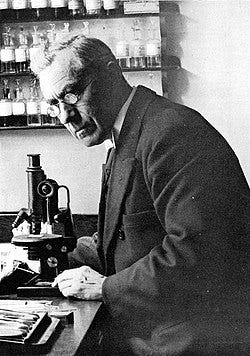
Martinus Willem Beijerinck, Dutch microbiologist. Studying tobacco mosaic disease in the 1890s, he began using the word “virus” to name the invisible particle he believed was the cause. Image in public domain, via Wikimedia Commons.
Other scientists took up this form of research and started looking for sub-microscopic entities that caused disease, and began calling these entities “viruses.” This word had meant “poison” for many centuries, but it seemed like an ideal concept to be transformed from being a chemical substance into a biological particle. One that none of them ever saw even as they were naming it.
What would a scientific hypothesis have looked like? Observation: people get sick. Speculative hypothesis: a pathogenic particle smaller than a bacteria causes this sickness. Experiment: expose healthy people to this particle and see if they get sick. Of course, you need the particle first. Pasteur, Koch, and the others didn’t have it. They never saw it. They couldn’t test it. But they just knew it had to be there and they were convinced it caused disease!
They imagined it into being
Thus a microbe was imagined into being. It was never found, and to this day has not been seen in real life—in a living body or living tissue or living body fluid such as blood. Not in a plant, not in an animal, not in a human. The only evidence offered for virus existence is electron microscope pictures which show images on a cellular level that are said to be “viruses.” [See my article on this here.]
But the tissue pictured in these images is nothing like living tissue. The tissue sample from which the electron microscope images are made has been subjected to several violent and highly destructive processes including being frozen, hardened into a block of resin, dyed, sliced into ultra-thin pieces, and bombarded with electrons. What these images show is altered in so many ways from the living state of the tissue that it is impossible to say what it shows.
Virologists place arrows on these images, pointing to certain shapes that are labeled “virus.” This is the only state in which any “virus” has ever been seen. They are not found in living tissue, or in body fluids such as saliva or mucus. We are told that even though there are said to be millions of them in an area the size of a pinhead in our noses or throats when we are sick, they can’t be seen there even massed together.
What do those electron microscope images depict? They could be bits of cell debris. They could be what some type of living tissue looks like after being killed several times over. They could be artifacts of the electron bombardment or something created by the freezing process. What they can’t be definitively identified as, is viruses. Or anything else we’ve ever seen in real life, for that matter.
And thus, the hypothesis that viruses exist and cause disease has not even been tested, never mind proven. Viruses are as imaginary now as they were when Pasteur and Koch speculated that they must be there, darn it!

Image of scientists in lab by Donnie0102, via Pixabay
Yet an entire field of scientific study, virology, came into being around this imaginary particle. Every university has a department of virology and new graduates every year with degrees in virology. Entire floors of pharmaceutical companies are occupied by virologists working on the bench, studying and manipulating entities that have never been found or even seen and developing vaccines for the diseases they have never been shown to cause.
From the observation that people, animals, and plants get sick, an inference that pathogenic microbes were the cause became theory and dogma without ever being proven by anything resembling the scientific method. For many decades various filtering processes were used in trying to find it, without success no matter how many times they tried. The electron microscope method is only the most recent failure to see or find a virus.
All along the way, for a century and a half, the repeated failure to find these particles was never viewed as falsification of the hypothesis. Scientists did not think, “Maybe we can’t find it because it isn’t there. Maybe we need a new hypothesis about what causes disease.”
Rather the hypothesis became a theory despite the lack of proof. The entire world began believing in the existence of this unproven entity, never even asking for the evidence. Our imaginations were captured to the degree that vast majorities have taken experimental injections since 2021 to protect them from the one that was said to cause “Covid-19.”
‘Health care’ system built on unproven speculation
And, despite zero proof, an entire medical system, incorrectly called a “health care system,” came into being and took root. This system is based around the model that pathogenic microbes, mostly “viruses,” are the causes of disease. It thrives because we believe that germs cause disease, viruses exist, and contagion is real.
Most of us accept without question that pharmaceutical interventions ranging from vaccines to petroleum-based medications are essential, and that the official western medical system is the only legitimate approach to health.
The whole system is founded, not on science in the original sense, but on assumption, inference, and imagination.
All these are good in their place!
But when science bases its conclusions about what happens in the human body on ideas in the minds of scientists rather than experiments that test what actually happens in nature, it is no longer science. When it refuses to acknowledge its failure to prove a hypothesis, its “theory” is revealed to be a false and illegitimate paradigm that can only be held in place through deception, repetition, and enforcement. And when it presents its findings as truths that people are expected to accept without evidence, it is no longer science but religion. (So it seems we are back where we started!)
‘Immune system’—another speculation
Another piece of what we are told about how our bodies work is the immune system. This notion is, like virology, also based on inference and speculation by scientists. I have written about the immune system before here, here, and here.
Scientists’ speculations about why we don’t get sick when surrounded by pathogenic microbes did not simply inspire the development of hypotheses to test. Rather, just as happened with viruses, these speculations became hypotheses and then accepted knowledge without testing. And, as usual, the lack of actual, material evidence for any claims made about this system and how it operates is simply not acknowledged.
It seems to me there is a great deal of misunderstanding about what it means when we don’t get sick, just as there is about why we do get sick. These misunderstandings are a significant reason why “viruses don’t exist” is hard for most people to accept.
In my next article, I hope to show how this fictional construct called the “immune system” evolved out of unproven assumptions and guesswork, and how it misleads us about what our bodies do to keep us healthy.
As always, this Substack is an AI-free zone. All of these words were written by a human being—me! I appreciate your support for writing that does not rely on robot assistance.
Thanks as always for reading! Please comment, share, and subscribe.
Recommended
Mike Stone explains the how virology does not follow the scientific method in his latest video.

Dawn Lester dismantles propaganda in the media about another “scary virus.”

The issue with modern science is that because of the economic incentives, scientists are rewarded on discoveries. This puts pressure on them to get the results they wanted. The methods sometimes are done in ignorance.
Example in physics:
Double slit experiment that says light is either a wave or a particle.
The detector that is used in the experiment influences the result because any detector uses energy to detect however infinitesimal.
Instead of acknowledging that, scientists got deeper and deeper into quantum theory where things can change without physical or energy interaction. It spawned a "religion" of physics but if they just realize detectors do influence things, the whole thing falls apart.
This is a good playlist on the issues of modern physics... Like medicine, the environment got scientists pushing out discoveries...
https://youtube.com/playlist?list=PLkdAkAC4ItcFyNFBywN0wiZ45pCnMr-Ay
Thank you Betsy for your excellent historical description of how an unproven notion, favored by a few prominent individuals, became 'fact' despite lack of evidence or logical coherence. Virology is primitive subjectivism.
The destruction of objectivity and reason in 'science' has also destroyed other lines of inquiry. By the second half of the 19th century economists were ascribing mathematical 'measurement" to "observed phenomena" by nature not measurable nor observable. For example, GDP is presented as a measurement of 'economic growth', even though it misrepresents and misinterprets production, and even though an industrial economy produces a couple billion products and one can merely guess at whether the "economy" is shrinking or growing. The "phillips curve" supposedly observed a "mathematical function" between "inflation" (defined as the 'average rate' of price increases based on someone's guesswork) and the 'rate of unemployment' (defined as someone's guess as to the percentage of people out of work...skipping over 'do they actually want and intend to return to work?')
Each of these wholistic mental constructs are artificial, non-observable with accuracy, and are built around contradictions. Take 'inflation": When prices rise in response to inflating the supply of money, some prices rise a lot, or a little, or decline as individuals and hosueholds all adjust their spending and saving to new data. No one could keep track of prices and even if they could one minute later it would all change again. There is no "rate of inflation" whatever the official statistics. Yet such anti-concepts have long been regarded as objects of scientific observation, as economists sought to become "scientific".
The broad trend has been the abuse and neglect of reason, in 'science', economics, court history, and other fields. As reason has been abandoned and renounced, power--the threat and use of force in human relationships--has advanced. The 'economists', posturing as wise economic bedside doctors, want to command coercive means of "controlling the economy".
Similarly, 'virologists' are propaganda specialists pushing tyranny and poisoning for 'public health'.